Bolivia – The Ultimate Adventure in the Heart of Nature
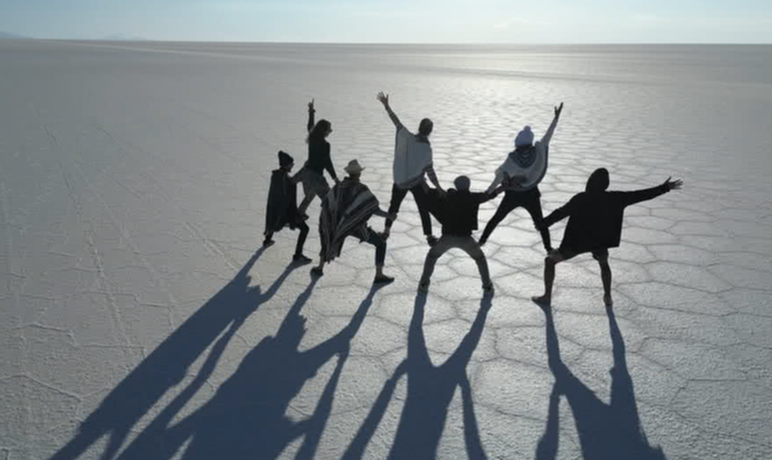
Our journey through La Paz, Rurrenabaque, the Altiplano and Sud Lípez.
We didn’t really know much about Bolivia before travelling there.
When we started looking for a new destination, we wanted to discover somewhere different — a country less touristy than Peru and still relatively unknown to many travellers.
And one place kept coming up again and again: the Salar de Uyuni.
Those images of endless white landscapes, colourful lagoons, volcanoes and vast deserts almost seemed unreal. In the end, they were what convinced us to go.
But we had no idea that our trip to Bolivia would take us from the tropical jungle to the icy landscapes of the Altiplano — with one little experience along the way that I could definitely have done without…
The altitude.
Preparing for the Trip
When planning a trip to Bolivia, one of the first things travellers often worry about is the altitude.
We were thinking about it too before we left.
We had travelled extensively, but we had never really experienced altitude sickness — especially not at more than 3,500 metres above sea level.
We knew we would be starting our journey in La Paz, at an altitude of over 3 500 metres, so it was important to allow ourselves some time to acclimatise.
Our advice
If you’re planning a trip to Bolivia, altitude is definitely something you need to take into account.
The most important things are to ascend gradually, stay well hydrated, avoid alcohol during the first few days, take it easy at the beginning and, above all, listen to your body.
Paracetamol can help relieve a headache, but it does not prevent acute mountain sickness. If symptoms become severe or get worse, seek medical advice and consider descending to a lower altitude.
And then, in Bolivia, we discovered the traditional local remedy: coca leaves.
But we were about to experience that for ourselves.
La Paz: Our First Encounter with Bolivia
Our arrival in La Paz goes pretty smoothly.
Until we step outside.
Oh yes… the altitude is definitely real.
We had taken some paracetamol as a precaution, but it doesn’t take long before we start feeling short of breath and develop a slight headache.
At the airport, we even notice pharmacies and oxygen available for travellers who need it. Seeing some people already struggling with the altitude as soon as they arrive is quite striking.
Then we start exploring the city. La Paz is incredible.
The streets go up, down, and then up again… while after just a few metres, we need a break.
Everything requires a little more effort. Even climbing a few steps starts to feel like a workout.
Thankfully, the cable cars make it easy to cross parts of the city while enjoying spectacular views of the surrounding mountains.
But what really makes us smile is seeing a little old lady, probably around 80 years old, casually walking uphill with a basket on her head.
We’re out of breath after just a few metres.
Her?
She just keeps going as if it were nothing.
And then the Bolivians share their little secret with us
We’re offered coca leaf tea.
So we give it a try. We drink it regularly and, little by little, we begin to adjust to the altitude.
We’re still more breathless than usual, but our bodies are slowly starting to understand what’s going on.
And above all, we learn one very important rule when travelling in Bolivia:
Take your time.
And Then… Off to Rurrenabaque
After La Paz, the scenery changes completely.
We take a domestic flight to Rurrenabaque, the gateway to the Bolivian Amazon.
And suddenly, here we are…
Back in the heat, surrounded by everything we love: jungle and adventure.
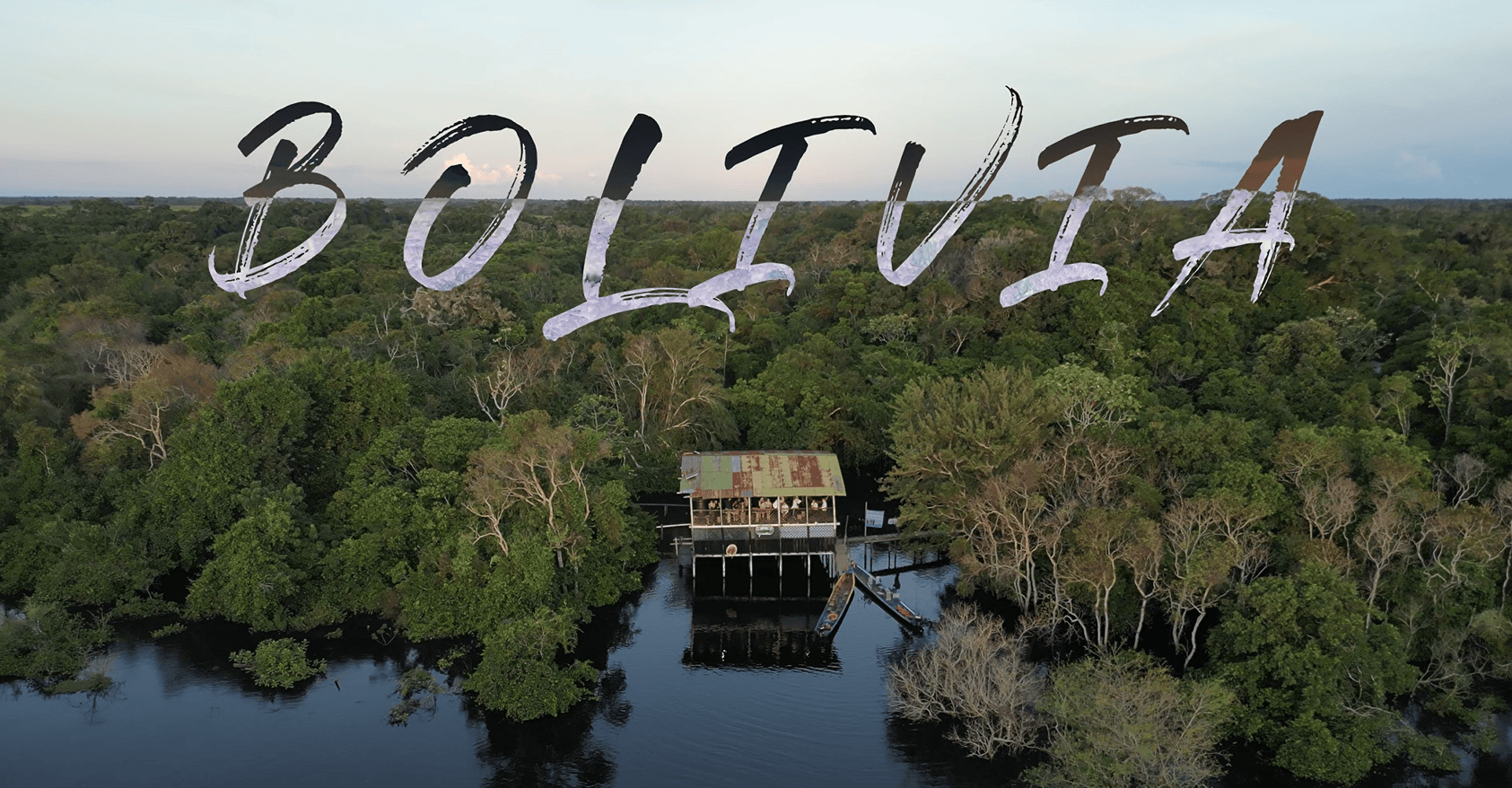
Once in Rurrenabaque, we set off on a three-day jungle expedition with one clear goal: to search for wildlife and, above all, two encounters we’ve been dreaming about — anacondas and Amazon river dolphins.
Rurrenabaque: The Bolivia We Weren’t Expecting
We fly from La Paz to Rurrenabaque before heading into the Bolivian Amazon for three days.
The contrast couldn’t be greater. Just a few hours earlier, we were more than 3,500 metres above sea level, surrounded by cold mountain air. Here, it’s hot, humid… and the mosquitoes are definitely around.
Over the next three days, we explore by boat in search of anacondas, caimans, monkeys and, most importantly, pink river dolphins.
Finding anacondas means walking through the vegetation, searching, waiting… and relying on a little luck. The dolphins, on the other hand, are mostly spotted from the boat.
We also have a little caiman living near our accommodation, whom we name Rosa. She’s regularly hanging around, and after a while, we almost start to feel like we know her.
And then, finally, we find the pink dolphins.
Everyone in the group is thrilled — although some get a slightly closer encounter than expected… Erwan even gets bitten by one of the pink dolphins!
Pretty unbelievable, and definitely a story nobody in the group is going to forget anytime soon.
From Amazonia to Altiplano
We had booked a five-day, four-night tour to explore the Salar de Uyuni and Sud Lípez.
After La Paz and Rurrenabaque, we were about to enter a completely different world once again.
Salar de Uyuni: Nothing Can Prepare You for This
We take an overnight bus to Uyuni.
From there, our jeep adventure begins, taking us across the Salar de Uyuni and Sud Lípez.
We strongly recommend exploring this region with an organised tour led by experienced local professionals. The distances are enormous, there are countless tracks, and some areas of Sud Lípez are extremely remote.
And then we finally reach the Salar.
And suddenly…
white.
Kilometres and kilometres of white.
A landscape that seems to stretch forever.
No real landmarks.
Just an incredible feeling of infinity.
We had seen countless photos before travelling to Bolivia.
But nothing can really prepare you for the feeling of standing in the middle of such an immense landscape.
Here we are, travelling by jeep through the heart of the largest salt flat in the world.
And for a few moments, we simply don’t know what to say.
Isla Incahuasi and the Famous Mirror Effect
We cross the Salar and discover Isla Incahuasi, with its enormous cacti rising seemingly out of nowhere in the middle of the salt flats.
It feels like stepping onto a movie set.
Then comes sunset.
And with it, the famous mirror effect, when a thin layer of water covers part of the Salar and reflects the sky.
It’s a moment we’ll remember for a very long time.
Not just because of the photos.
But because of that incredible feeling of being somewhere completely unique.
Did You Know?
The Salar de Uyuni covers more than 10,000 km², making it the largest salt flat in the world. During the rainy season, a thin layer of water can create its famous mirror effect.
It is one of the most iconic landscapes you can experience on a trip to Bolivia.
Then Bolivia Reveals a Whole New World
After the endless white of the Salar, the landscape transforms once again.
We enter the spectacular Sud Lípez, one of the most striking regions of our Bolivia journey.
Red: Laguna Colorada.
Green: Laguna Verde.
Flamingos gather in the middle of the lagoons, as if they had chosen one of the most surreal landscapes on Earth as their home.
Then come the volcanoes and geysers, and once again, it feels as though we’ve landed on another planet.
Our journey continues through the Siloli Desert and its famous Árbol de Piedra, the iconic stone tree shaped by centuries of wind and erosion.
Around every corner, another extraordinary landscape appears.
And somehow, we’re still in Bolivia.
Sud Lípez: Bolivia Beyond the Beaten Path
The Sud Lípez left a lasting impression on us, not only because of its spectacular landscapes, but for another reason entirely.
Life here is incredibly simple.
Accommodation can be very basic.
Hot water isn’t always available.
Sometimes, there’s no shower at all.
Electricity is limited.
Resources are scarce.
And yet, what stayed with us most was the kindness of the local people.
Travelling through these remote villages gave us a glimpse into a way of life very different from our own, far away from mass tourism.
That’s probably what touched us the most.
Here, you truly feel like you’re experiencing Bolivia off the beaten path.
The Journey the Photos Don’t Show
Because it’s worth being honest about it:
Bolivia isn’t always comfortable.
The Altiplano can be incredibly cold.
The days travelling by 4×4 can be long.
Some mornings start very early.
The altitude takes its toll.
The roads are rough.
And hot water is definitely not guaranteed.
But somehow, these are also the moments that turn into some of the best travel memories.
One evening, we were caught in a powerful storm.
The wind was so strong that we genuinely wondered whether the roof of our accommodation was going to hold.
In the small villages of Sud Lípez, electricity isn’t available around the clock. It usually runs for just a few hours in the evening, often between 6 pm and 9 pm.
So when the lights go out, everyone gathers around a candle.
We talk, play cards, laugh… and somehow, these simple evenings become some of the moments we remember most.
Sometimes, the less comfort you have, the more you simply enjoy the moment.
The Altitude
We probably worried more than we needed to.
But altitude is definitely something to take seriously when planning a trip to Bolivia.
The key is to take your time, allow your body to acclimatise, and listen to how you’re feeling.
And yes…
we did end up chewing a few coca leaves.
The Landscapes
We knew the Salar de Uyuni would be spectacular.
What we didn’t expect was such an incredible diversity of landscapes.
The endless salt flats.
The colourful lagoons.
The flamingos.
The geysers.
The volcanoes.
The vast Sud Lípez Desert.
And then, at the complete opposite end of the spectrum, Rurrenabaque and the Bolivian Amazon.
It was probably this incredible contrast that impressed us the most.
The Memories We’ll Never Forget
There are so many.
But some memories stay with us just a little more than others.
The Salar de Uyuni, of course, and that unforgettable first sight of endless white stretching towards the horizon.
The laughs we shared with our group, which made those long days on the road so much easier.
Erwan and his pink river dolphin, obviously.
That evening spent by candlelight during the storm.
And then, the encounters with local people in Sud Lípez.
Seeing how some families live with so few resources really made us reflect.
Sometimes, travelling reminds you just how fortunate you are with what you already have.
So, Would We Recommend Bolivia?
Without hesitation.
But it’s important to know what to expect.
Travelling through Bolivia sometimes means adapting.
To the altitude.
To the cold.
To the long days on the road.
To simple accommodation.
But in return, you get to discover a country that still feels relatively untouched by mass tourism, with spectacular landscapes and an incredible diversity of experiences.
From La Paz to Rurrenabaque, from the Bolivian Amazon to the Salar de Uyuni and Sud Lípez, it felt like discovering several different worlds in a single journey.
And that’s probably what we loved most about it.
Because Bolivia is definitely about so much more than just the Salar de Uyuni.
Dodo’s Practical Travel Guide
When Is the Best Time to Visit Bolivia?
The dry season generally offers the best conditions for exploring the Bolivian Altiplano. The rainy season, on the other hand, gives you a chance to witness the famous mirror effect at the Salar de Uyuni.
What About the Altitude?
Altitude is something to consider from the very beginning when planning a trip to Bolivia. Give your body time to acclimatise gradually and avoid doing too much during your first few days.
How Much Time Should You Plan?
If you want to combine La Paz, Rurrenabaque, the Salar de Uyuni and Sud Lípez, allow enough time to enjoy each destination without rushing from one place to the next.
What Should You Pack for Bolivia?
A little bit of everything!
🏔️ Very warm clothes
☀️ Lightweight clothing
🥾 Good walking shoes
🧴 Sunscreen
🦟 Mosquito repellent
🩱 Swimwear
Because on a single trip to Bolivia, you can go from freezing temperatures at over 4,000 metres in the Altiplano to the tropical heat of the Amazon.
The Dodo’s Advice
Don’t come to Bolivia just for the Salar de Uyuni.
Take the time to discover Bolivia in all its diversity.
That’s exactly what makes a trip to Bolivia so unforgettable.
A Final Word
Whether it’s the sheer scale of its wide-open spaces, the incredible wildlife of the Amazon, the warmth of its people, or the extraordinary diversity of its high-altitude landscapes, Bolivia remains one of our favourite travel experiences.
We already know we’ll probably return one day… although next time, we’ll come fully prepared with our ponchos and llama-wool gloves!